How to Pick Backsplash to Match Countertop
Choosing a backsplash should feel exciting, not overwhelming. If you’re wondering how to pick backsplash to match countertop without second-guessing every sample, you’re not alone. The right pairing can pull your whole kitchen remodel together and make the room feel intentional from every angle.
In most projects, the countertop is the workhorse surface and the visual anchor. Whether you are planning a light refresh or a full kitchen remodel, a few simple design tips will help you move from “I hope this works” to “I know this is right.”
Different Types of Backsplashes
Each backsplash material brings its own character, care needs, and price point to a kitchen design or bath remodel.
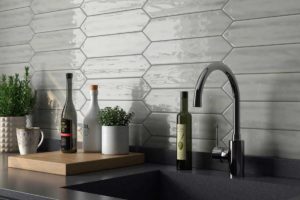
Ceramic and porcelain tile are popular choices available in countless shapes, sizes, and glazes. Choose from options ranging from classic subway to sculpted artisan pieces.
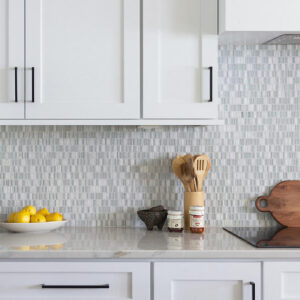
Glass tile reflects light and adds shimmer, making compact rooms feel larger. This effect is magnified when combined with quiet countertops that let the sparkle shine.

Natural stone like marble, quartzite, or travertine offers organic veining and subtle variation. These stones work best with simpler counters so the two surfaces do not compete.
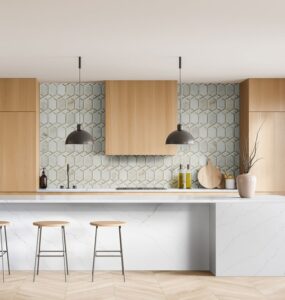
Metal backsplashes in stainless steel, brushed brass, or copper lend a professional or industrial air to any design. They perform particularly well behind ranges where heat and splatter are concentrated.
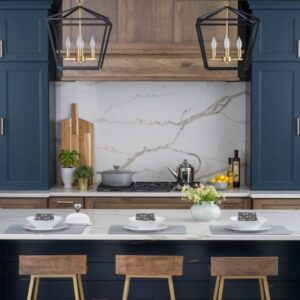
Slab backsplashes in quartz or stone extend the countertop up the wall for a seamless look. This choice is ideal when you want the countertop material to be the star and the wall to feel like an elegant continuation.
Should Backsplash Match Countertop or Cabinets?
It is natural to wonder should backsplash match countertop or cabinets more closely. The answer depends on which element you want to emphasize. Matching the backsplash to the countertop creates a smooth, continuous look that feels clean and modern. Matching it to the cabinets, on the other hand, can make the room feel taller and more cohesive when cabinetry is the main feature.
If you are undecided, use the countertop as your guide and let the backsplash bridge the gap between cabinets and counters. Choose a tile that picks up the undertone of your cabinets and one of the quieter colors in the countertop. This approach works in both kitchen design and bathroom design.
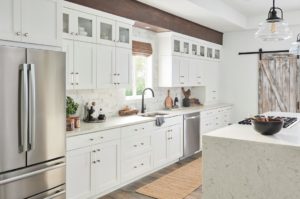
How to Choose Backsplash Tile that Complements My Countertops
The key to learning how to pick backsplash to match countertop is to focus on harmony rather than exact duplication.
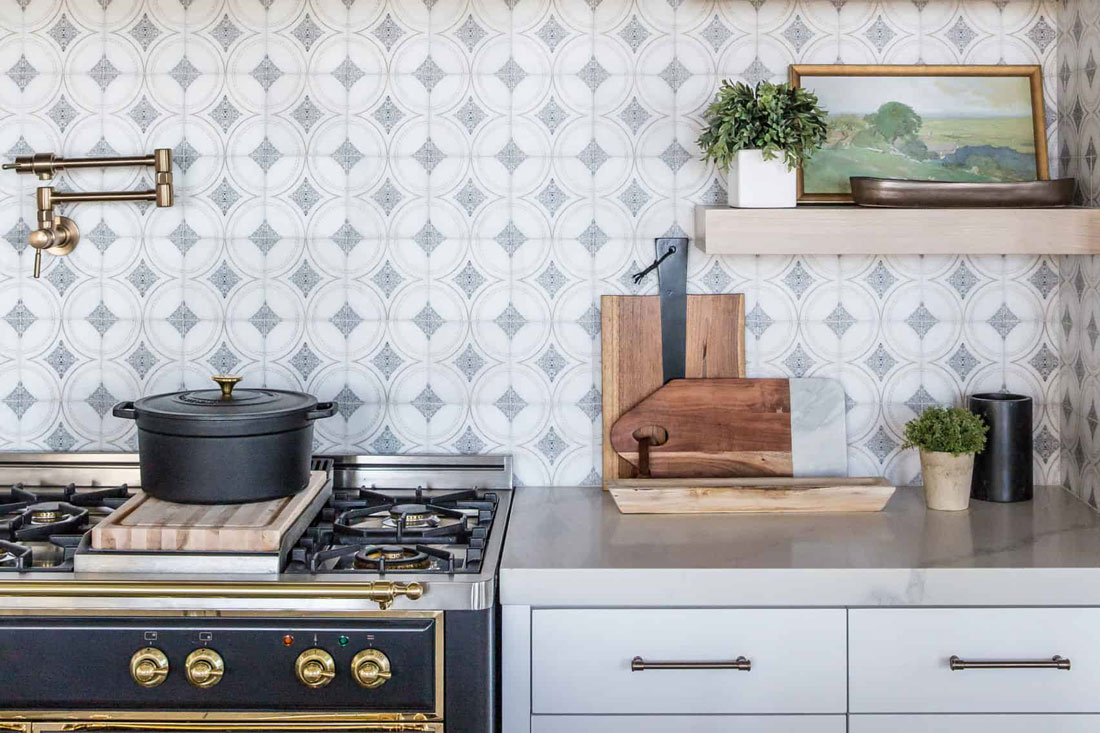
- Study the pattern in your countertop. If it has bold veining or noticeable speckles, choose a backsplash with a quieter surface so the eye has a place to rest. When the countertop is solid or subtly mottled, it can handle more intricate tile shapes or layouts.
- Consider color and contrast. Pull one or two tones from the countertop and repeat them in the backsplash, then decide how much contrast you want between the two surfaces. Low-contrast pairings feel serene, while higher contrast looks crisp and modern.
- Think about texture and sheen. A glossy tile will bounce light and make colors appear brighter. A matte or honed finish will soften reflections and can make a busy surface feel more grounded. Grout color also influences how bold or quiet the backsplash appears.
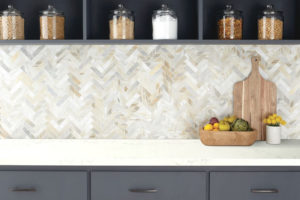
Matching Specific Countertop Materials
Different countertop materials have their own personality, pattern, and undertone. Understanding what your countertop is “saying” helps you choose a backsplash that feels intentional, not accidental.
What backsplash goes with white quartz countertops?
White quartz often has subtle veining, which makes it versatile. For a classic look, pair it with white or off-white subway tile in a similar undertone. Or, introduce a soft color like misty blue or sage green in a simple shape to keep the overall effect calm.
How to match backsplash with granite countertops?
Granite can be dramatic with swirls, flecks, and multiple colors in a single slab. Identify the quietest tone within the stone and choose a backsplash that echoes that hue in a simple finish so the room feels composed and the granite remains the showpiece.
What backsplash looks good with laminate countertops?
Laminate countertops are often the backbone of hardworking family kitchens. Elevate the overall feel by pairing them with a slightly more luxurious backsplash, such as ceramic subway tile, porcelain mosaics, or a sculpted pattern in a neutral color.
What are kitchen backsplash ideas to match dark countertops?
Dark countertops in deep charcoal, espresso, or black add drama and sophistication. Keep the space from feeling heavy by using lighter backsplashes that reflect light such as white, cream, or pale gray tile; add warm metals in lighting or hardware to bridge the transition.
How to Match Backsplash and Countertop in a Small Kitchen
In a small kitchen, visual continuity is essential. Limit the number of competing colors and patterns, and keep tile scale in mind so the backsplash does not overwhelm the room. Choose a countertop with gentle movement and a backsplash that repeats one of its main tones in a simple, appropriately sized tile layout. This approach keeps the focus on function while still delivering a polished, intentional finish.
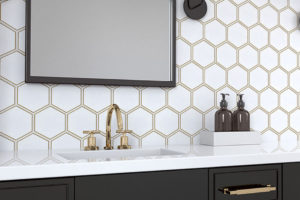
Applying These Ideas to a Bath Remodel
Although most people think about tile pairings in the kitchen first, the same principles apply in a bath remodel. Start with the countertop or the largest tile surface, then choose a complementary backsplash or accent tile at the vanity. In a compact bath, using similar tones on the counter and wall can make the space feel larger and more serene.
Final Design Tips for a Successful Fairfield Remodel
No matter where you live, the key to learning how to choose backsplash tile that complements my countertops is to slow down and look at samples together in your actual home. Take photos from different angles to see how the combination will read in a finished Fairfield remodel.
Thoughtful planning now means you will love the way your countertop and backsplash work together for years to come. When in doubt, lean on timeless materials, a simple color palette, and a layout that supports the way you cook and live at home every day. This method is the answer to how to pick backsplash to match countertop with confidence.
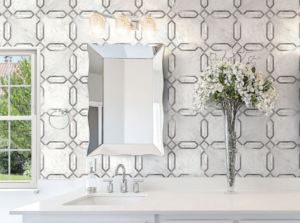
JC Huffman: Here to Help You Make Confident Selections
For many homeowners, samples and swatches quickly become overwhelming. JC Huffman serves as Fairfield, IA’s trusted remodeling partner, guiding clients through every choice in a kitchen design or bathroom design. Whether you’re planning a simple update or a full Fairfield remodel, our team can help you evaluate how light, pattern, and proportion will look in your home. Bring your countertop and backsplash ideas to one of our experts for personalized guidance on the perfect pairings for your space. Contact us today to get started!
Summary
Exploring how to pick backsplash to match countertop doesn’t have to feel intimidating. Start by understanding your material options. Then balance pattern, color, and texture so that each surface supports the others. Whether you’re refreshing a compact kitchen, planning a spa-like bath remodel, or coordinating finishes for an entire Fairfield remodel, thoughtful combinations will reward you every time you step into the room.
FAQ: How to Pick Backsplash to Match Countertop
1. How do I choose a backsplash that complements my countertop?
Start by deciding which surface should take the lead visually, then let the other one play a supporting role. If one is bold, the other should be calmer.
Look closely at your countertop’s undertone, pattern, and level of contrast. Pull one or two colors from the countertop into the backsplash so they relate, then vary texture or sheen to keep things interesting. A quiet counter can handle patterned or textured tile, while a busy counter usually looks best with simple shapes and low-contrast grout.
2. Should the backsplash match the countertop or the cabinets?
There is no strict rule; it depends on the look you want. Matching the cabinets feels tall and architectural, while matching the countertop feels sleek and horizontal.
If your cabinets are the strongest visual element, echoing their color in the backsplash creates a unified frame and makes the room feel taller. When the countertop is the showpiece, a backsplash that closely relates to its color but has a simpler pattern will make the whole run of cabinetry feel cohesive. Many spaces land in the middle: the backsplash bridges both by borrowing undertones from the cabinets and a subtle color from the countertop.
3. Should my backsplash be lighter or darker than my countertop?
Most kitchens feel brighter and more open when the backsplash is lighter than the countertop. Light behind the work zone reflects illumination and keeps the room from feeling heavy.
If your countertop is dark, a light or mid-tone backsplash helps balance the weight and prevents a cave-like effect, especially under wall cabinets. With light countertops, you can choose a similar light backsplash for a soft, seamless look, or introduce a deeper tone for drama. The key is to test samples vertically; colors look darker and more intense on the wall than they do lying flat.
4. What backsplash goes with white quartz countertops?
White quartz is incredibly flexible, so think in terms of undertone and mood. Match the undertone first, then decide how calm or expressive you want the wall to feel.
For a timeless, quiet kitchen, use soft white or cream tiles in a straightforward pattern like subway or stacked rectangles. If you want a bit more character, bring in pale blues, greens, or grays that echo the quartz veining. Textured or handmade-look tiles add depth without overwhelming the simplicity of the countertop. For a very modern look, a matching quartz slab as the backsplash creates a clean, gallery-like backdrop.
5. How do I pick a backsplash for busy granite countertops?
With busy granite, the countertop is already the main event. The backsplash should calm things down, not compete.
Look for the softest, least prominent color in the granite and use that as your backsplash color in a simple, low-pattern tile. Classic rectangles, squares, or large-format tiles work well because they do not introduce more visual noise. Keep contrast between the tile and grout subtle so the grid lines don’t fight with the granite’s movement. This approach lets the stone shine while still giving the room a polished, intentional finish.
6. What backsplash looks good with laminate countertops?
Laminate can look surprisingly upscale when it is paired with a thoughtful backsplash. Use the tile to add texture, depth, and a sense of permanence.
Because laminate surfaces are usually smooth and consistent, you can give them a boost with ceramic or porcelain tile that has slight variation in tone or surface. White or neutral subway tile is a reliable choice that instantly feels clean and classic. If the laminate has a strong pattern or wood look, keep the backsplash fairly quiet so the two do not clash. Stone-look porcelain tiles can also bring in a “natural” feel without the cost or maintenance of real stone.
7. In what order should I choose cabinets, countertop, and backsplash?
The most practical order is cabinets first, countertop second, and backsplash last. Each step narrows the options and makes the next decision easier.
Cabinets cover the largest visual area and set the style language for the room, so lock in their color and door style first. Then choose a countertop that works with those cabinets and suits how you cook and live. Once those two are decided, you can treat the backsplash like the finishing layer that pulls everything together. Laying all three choices side-by-side at the end helps confirm that the trio looks cohesive.
8. How high should my backsplash go on the wall?
At a minimum, the backsplash should reach from the countertop to the bottom of the wall cabinets or shelves. That height protects the wall in the main splash zone.
In many homes, extending the backsplash higher in key areas makes the kitchen feel more custom. Running tile all the way to the range hood or ceiling behind the cooktop turns that wall into a focal point. In spaces without upper cabinets, carrying tile up to a natural break such as a window trim or crown molding looks polished and intentional. Balance your budget, your cleaning preferences, and how much visual impact you want.
9. How do I coordinate backsplash, countertop, and flooring together?
Treat these three as a coordinated trio, not separate purchases. Choose one star, one strong support, and one quiet background.
If your floor has a pronounced grain or pattern, keep the countertop and backsplash simpler and closer in tone so the eye is not pulled in three directions. When the countertop is highly veined or speckled, opt for a muted floor and a modest backsplash that repeat some of its colors. Lay samples of all three finishes together in your space and look at them in morning, afternoon, and evening light. A good combination will feel balanced from every angle.
10. Can I mix different backsplash materials or patterns in one kitchen?
Yes, mixing can look elevated when it is done with intention and restraint. The key is to define a main material and a clear accent.
Use one tile or slab as the primary backsplash throughout most of the room. Then introduce a second pattern or material only in a focused area, such as behind the range or at a bar niche. Keep the palette related by repeating colors or finishes so the accent feels like a variation, not a random insert. You can also mix layouts, such as a simple subway on the perimeter and herringbone behind the cooktop, using the exact same tile.